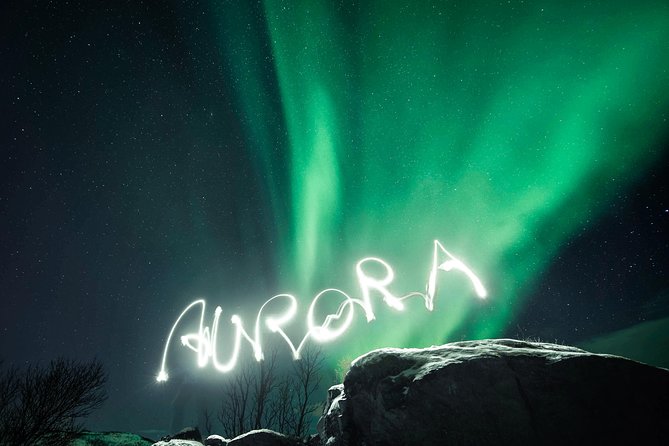
Reviewed · TROMSØ
Symphony – Arctic Breeze, teamining up with nature.
This tour is interesting because it treats the aurora like a moving target, not a hope-and-pray wish. I love that you leave Tromsø with a plan based on conditions, then you keep adapting as the sky changes. The small group size also makes it feel more like a coordinated hunt than a cattle call.
I also like the hands-on comfort and photo support. You’re given warm thermal suits, hot drinks and cookies, plus help with camera setup and a tripod so you can actually bring home decent shots. One thing to consider: the night depends on cloud cover and aurora activity, so even with expert guiding like Brynjar or Oscar, you might not see strong lights every time.
Key things to know before you go
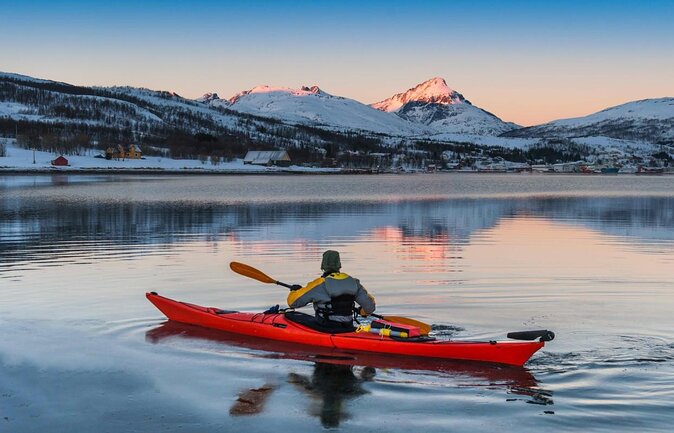
- Small group (max 19 travelers) keeps the pace flexible and the guidance more personal.
- Heated, panoramic-window transport helps you stay warm while scanning the sky.
- Thermal suits, hot chocolate, and cookies reduce the usual first-time-aurora discomfort.
- Camera help plus a tripod means you are not figuring out settings in the cold.
- Local guides look for clear-sky windows, and you get an honest read on the odds that night.
- You can drive into neighboring Finland if conditions in Tromsø are not cooperating.
Why an Aurora Borealis bus chase from Tromsø beats random waiting
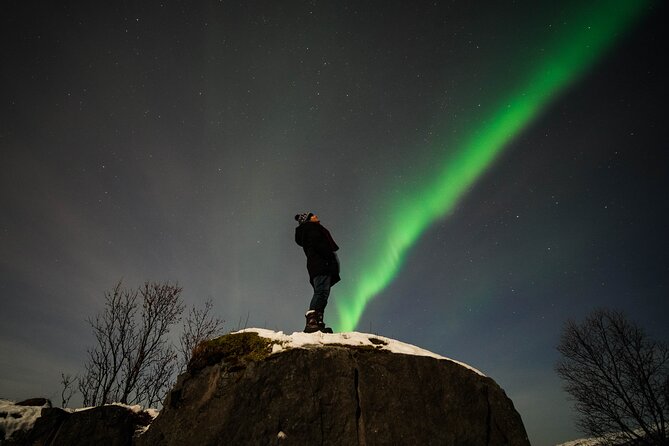
Tromsø gives you easy access to the Northern Lights. The catch is the sky is fickle. Clouds roll in. Wind shifts. Even when the aurora forecast looks promising, you still need darkness, clear skies, and a spot far enough from city light.
That is why this tour works well for most people. Instead of staying put and refreshing an app all evening, you move. Your guide checks conditions and then drives where the chances improve. You get a real-time, on-the-ground strategy, which matters because aurora viewing is equal parts timing and weather.
And because it is a heated bus with panoramic windows, you do not have to stand outside the whole time. You can step out for viewpoints, then get back into warmth fast when it is time to reassess.
Other Tromsø trips worth keeping open:
- Tromsø: Reindeer Sledding & Feeding with a Sami Guide
★ 4.8 · 6,417 reviews - Tromsø: Whale Watching Tour by Hybrid-Electric Boat
★ 4.5 · 4,217 reviews - From Tromsø: Aurora Borealis Tour
★ 4.8 · 4,206 reviews
The night logistics that make the tour feel smooth
You start in Tromsø at 6:30 pm, and the tour runs about 5 to 8 hours. That length is key. Aurora “on” moments can be quick, and the clouds can be the opposite of punctual. Having a longer time window gives the guide room to chase clear skies without rushing everyone.
The group caps at 19 people. That is small enough that you can actually hear instructions and get camera help without a bottleneck. It is also big enough to keep energy up while you are waiting in the cold.
The tour uses a mobile ticket, which is convenient when you are juggling winter gear, coats, and gloves. You also return to the same starting area at the end, and the operator notes hassle-free pickup and drop-off in Tromsø. I recommend you confirm the exact pickup point you will use when your confirmation comes through.
Warm thermal suits, hot drinks, and the comfort that keeps you focused
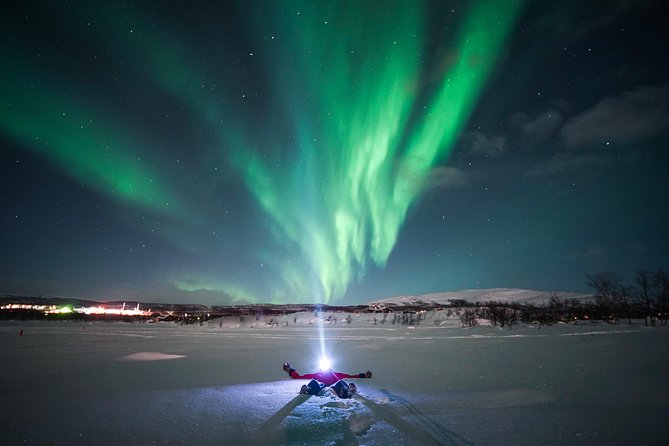
Northern Lights tours can be a lesson in how quickly cold steals your attention. This one tries to protect you from that.
You receive warm thermal suits, plus hot chocolate and cookies along the way. That sounds simple, but it changes the whole experience. When your hands and legs stay warm, you can actually watch the sky without doing constant gear management.
Also, the tour includes a tripod. Even if you bring your own camera, the tripod is usually what makes the difference between fuzzy blobs and recognizable aurora patterns. The guide also gives assistance for photography, which is a big deal if you are new to night shots.
One practical note from the experience name and setup: you may see marketing language about a glass roof on the van. Some people reported that the vehicle did not have that feature on their night, though the windows were still panoramic. So do not plan your expectations around a roof view. Plan for warmth, big windows, and fast stops to shoot.
The guides do the real work: honest odds and quick decision-making
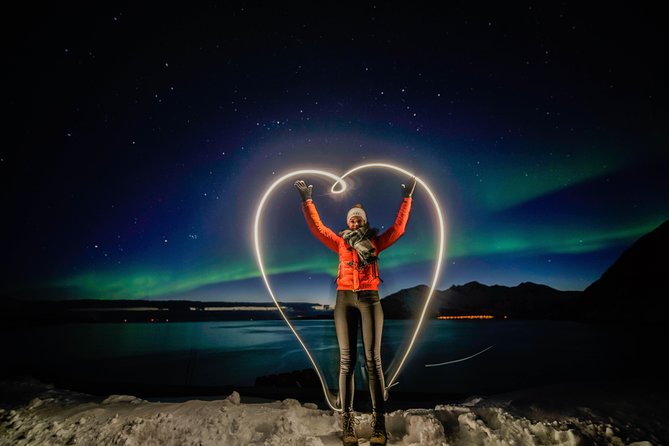
On an aurora chase, the sky decides the schedule. The guide’s job is to respond fast and keep everyone safe and comfortable.
You get an honest assessment of the likelihood of seeing the lights that evening. The guide explains what they are looking for, including clear skies and areas with stronger solar activity. That matters because aurora strength and visibility are not just about being in the right country. You can be under the right aurora oval and still see nothing if clouds block it.
This tour also highlights guidance from experienced local leaders. Brynjar and Oscar show up repeatedly in the stories from past nights. People describe them as active in spotting better locations, and helpful with camera settings. That kind of “hunt with a plan” is exactly what you want when you are paying for a guided chase instead of DIY-ing it.
Same stretch of Arctic coast, a different kind of day:
- Tromsø’s Top-Rated Fjord & Fishing Cruise – All-Inclusive
★ 4.7 · 4,017 reviews - Tromsø: Fjords and Sommarøy Islands Tour with Salmon Picnic
★ 4.7 · 3,922 reviews - Tromsø: Self-Drive Husky Dog Sledding Adventure
★ 4.9 · 3,498 reviews - Tromsø: Reindeer Camp and Sami Cultural Tour with Lunch
★ 4.7 · 3,326 reviews
How the itinerary plays out in real life, from Tromsø outward
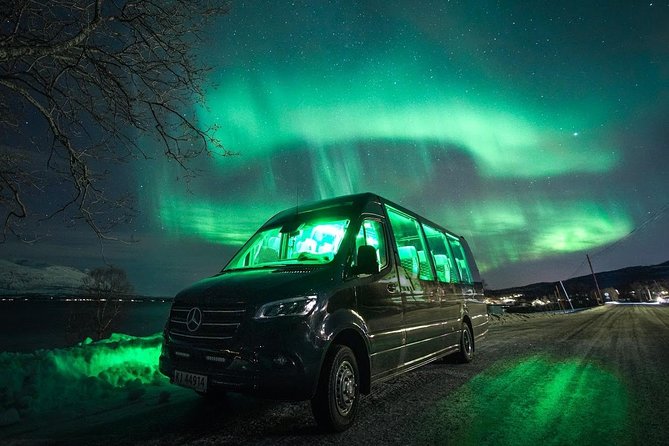
The tour begins with Tromsø as your base. From there, the plan is flexible. You depart the city on a heated bus and scan through the windows while you travel.
You can expect the guide to do a few things early on:
- Get everyone sorted into winter gear, including thermal suits.
- Explain what to watch for in the sky and how stops will work.
- Share expectations for that evening based on current conditions.
Then you start moving toward remote viewpoints. Depending on what the sky is doing, the tour may stay in Norway or head to neighboring Finland. That cross-border option is not a gimmick. It is a practical response. Sometimes the weather just breaks differently a bit farther away from Tromsø, and a short drive can mean the difference between foggy cloud cover and a clear window.
The tour also allows flexibility around stops. In practice, that usually means you could do multiple viewpoint changes as clouds shift, rather than betting everything on one spot for the entire night.
Stop-by-stop: your Tromsø start and the first lights-window strategy
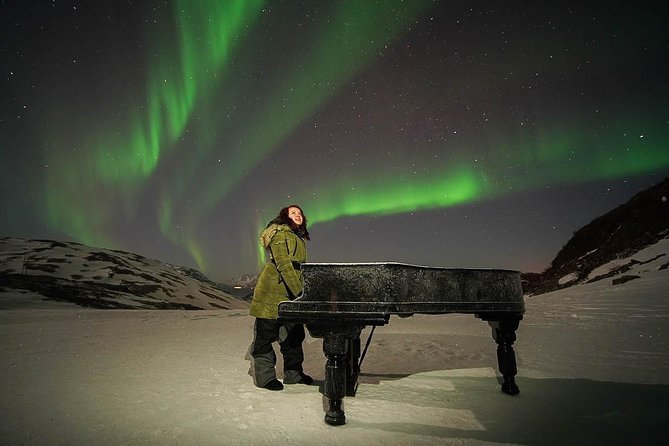
Even before the aurora shows up, the first phase of the evening sets your success up.
From Tromsø, you will head out in the warm bus and keep your eyes on the sky. When you approach possible viewing zones, the guide typically provides clear direction on when to step out, where to stand, and how to get your camera ready.
The biggest early win is temperature control. The guide helps get you geared up, then you are ready to respond quickly when conditions improve. If the aurora is faint at first, you want patience without freezing.
If the sky is truly uncooperative, the guide does not fake hope. They keep adjusting the plan, including changing regions if needed. Some nights can start in heavy rain or wind, but the guide may continue driving until a viable viewing window opens. That is the core value of a guided chase: you are not stuck watching the weather deteriorate in one place.
Photographing the Northern Lights: tripod time and camera help that actually matters
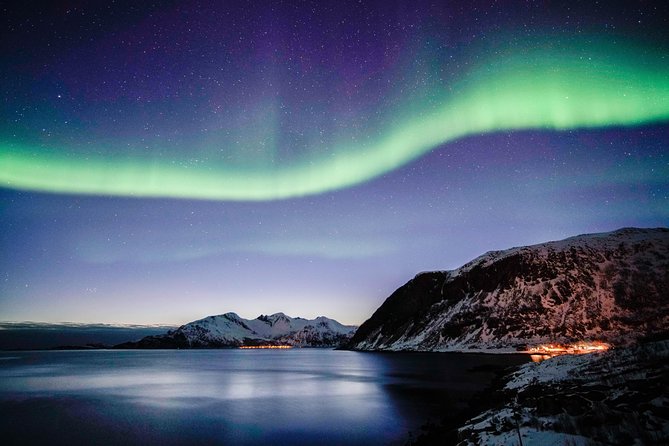
Night photography is where first-timers often get discouraged. You press the shutter, the camera shows a dim scene, and you think you missed everything. But aurora photos often require different settings than you would use in daytime.
This tour includes tripod support and camera assistance. You are not left on your own to figure out settings while the guide is already walking you to a better spot.
Here is what you can expect the guide to help with in a useful way:
- Getting your camera stable on the tripod so the aurora does not smear.
- Adjusting basic settings for the conditions you are facing that night.
- Timing shots around when the lights appear or intensify.
- Promoting clear composition, so you do not just aim at the sky and hope.
You also get professional photos or portraits included. That is a nice safety net. Even if your own shots are mid, you still leave with solid images from the night.
What it feels like when clouds try to ruin the night
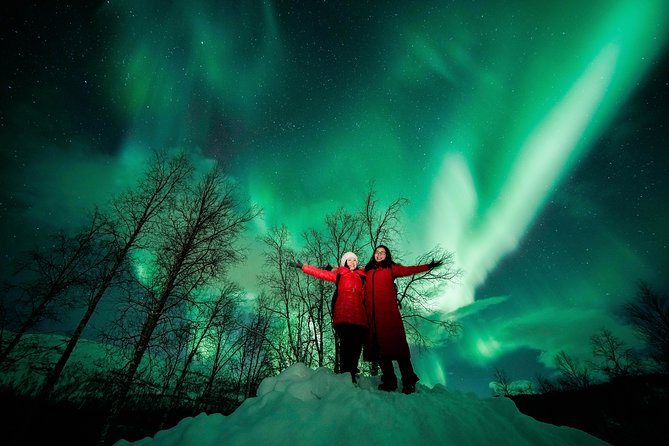
This tour is designed for reality, not perfect conditions.
You should expect the guide to keep checking cloud cover and likely forecast patterns while you are out there. If the sky is thick with cloud early, the plan becomes about patience and repositioning. People have had nights where the first leg started with snow or cloud, then things improved enough for aurora sightings after continued driving.
Sometimes you may get faint lights first, which can look disappointing until your eyes adjust. A good guide helps you manage that moment. You also do not want to waste your warm gear time by constantly packing and unpacking. The suit and hot drinks reduce that “gear thrash,” so you stay ready when a clearer patch shows up.
One more note from the experience vibe: some guides build a small fire stop for warmth, hot chocolate, and waiting. That sort of pause also makes the evening feel more like a shared outdoor moment instead of constant bus stops. If it happens on your date, treat it as a bonus, not a promise.
Price and value: what $188.03 is buying you
At $188.03 per person, this is not the cheapest way to chase the aurora. But you are paying for several things that are hard to replicate solo without a lot of time, gear, and local know-how.
You are getting:
- Heated transport with panoramic windows, so you spend more time stable and warm.
- Thermal suits, which are expensive to buy and annoying to bring if you do not have winter gear already.
- Hot chocolate and cookies, so waiting does not turn into suffering.
- Tripod and camera help, which reduces the learning curve for aurora photos.
- Professional photos or portraits, which gives you real output even if your own camera settings are still new.
- A guide who actively searches for better spots based on current conditions.
If you were to DIY it, you would still need winter clothing, a vehicle plan, and photo setup support. You might also waste time driving aimlessly while the cloud cover changes. Here, the value is in the organized chase and the included comfort package.
You also have a decent group size balance. Max 19 people means you usually do not feel swallowed by a huge group, and that improves both viewing and photo opportunities.
Who this tour suits best, and who should think twice
This tour is a strong fit if:
- You are visiting Tromsø for a limited number of nights and want the best odds without doing day-after-day logistics.
- You are new to aurora photography and want tripod support plus guidance.
- You do not want to guess how to dress for subzero conditions. The thermal suits help a lot.
- You prefer active chasing over passive waiting.
It may be less ideal if:
- You are counting on very specific vehicle features, like a glass roof. The panoramic windows are more consistent than any marketing detail about rooftops.
- You need a very quiet, low-movement experience. You will likely do multiple stops.
- You are extremely sensitive to communication style. One small number of accounts raised concerns about a non-responsive guide/driver on a night with no lights. Most guidance experiences described strong communication, but it is worth knowing that any live outdoor activity has variability.
Should you book Arctic Breeze for your Northern Lights night?
I think this is a good booking for most first-timers in Tromsø. It combines comfort gear, warm transport, and real guidance into a structured aurora chase, and that is what boosts your odds without turning your evening into a cold workout.
If you want one-night confidence, this is the style of tour to choose. If you have very high expectations tied to a single viewing spot, then be prepared for the guide to adapt as conditions shift.
My practical advice: check that your camera is ready for night shots before you leave, pack layers under the thermal suit, and bring gloves you can remove briefly for camera settings. The sky might not cooperate, but a guided plan that keeps moving and keeps you warm is the best way to honor the promise of Tromsø’s aurora season.
FAQ
What time does the tour start in Tromsø?
It starts at 6:30 pm.
How long is the Aurora Borealis chase?
The tour is about 5 to 8 hours.
Where do I meet, and does it return me to Tromsø?
The meeting point is Skansegata 7, 9008 Tromsø, Norway. The activity ends back at the meeting point.
What is included for warmth and photography?
Hot chocolate and cookies are included, along with warm thermal suits. The tour also includes tripod support, professional photos or portraits, and camera help.
Do you stay only in Norway, or do you go to Finland too?
You may drive to remote viewpoints in either Norway or neighboring Finland, depending on conditions.
If the aurora does not appear or the weather is poor, what happens?
The experience requires good weather. If it is canceled due to poor weather, you should be offered a different date or a full refund. You can also cancel for a full refund up to 24 hours in advance.
Newest departures listed in Tromsø
- Tromsø:Northern light tour with mini bus i Tromsø★ 4.9 · 8 reviews
- Tromsø Sweet Temptations tour: afternoon tea & chocolates★ 4.8 · 5 reviews
- Tromsø: Sommarøy Islands Midnight Sun Tour★ 5.0 · 9 reviews
- Tromsø: City Walk & Polar Museum (Private or Shared)★ 3.7 · 3 reviews
- Tromsø: Snowshoeing in a small group with free photos★ 4.3 · 4 reviews
- Tromsø: Snowshoeing in Scenic Landscape★ 4.6 · 37 reviews
- Tromso: Scenic & Eco-Friendly Snowshoeing Tour★ 4.8 · 113 reviews
- Tromso: Sightseeing Cruise by Catamaran with Snacks & Drinks★ 4.4 · 21 reviews